Naps: How Long and When, According to the Research
Dovy Paukstys
Founder, Komori Care
You've Had the Bad Nap
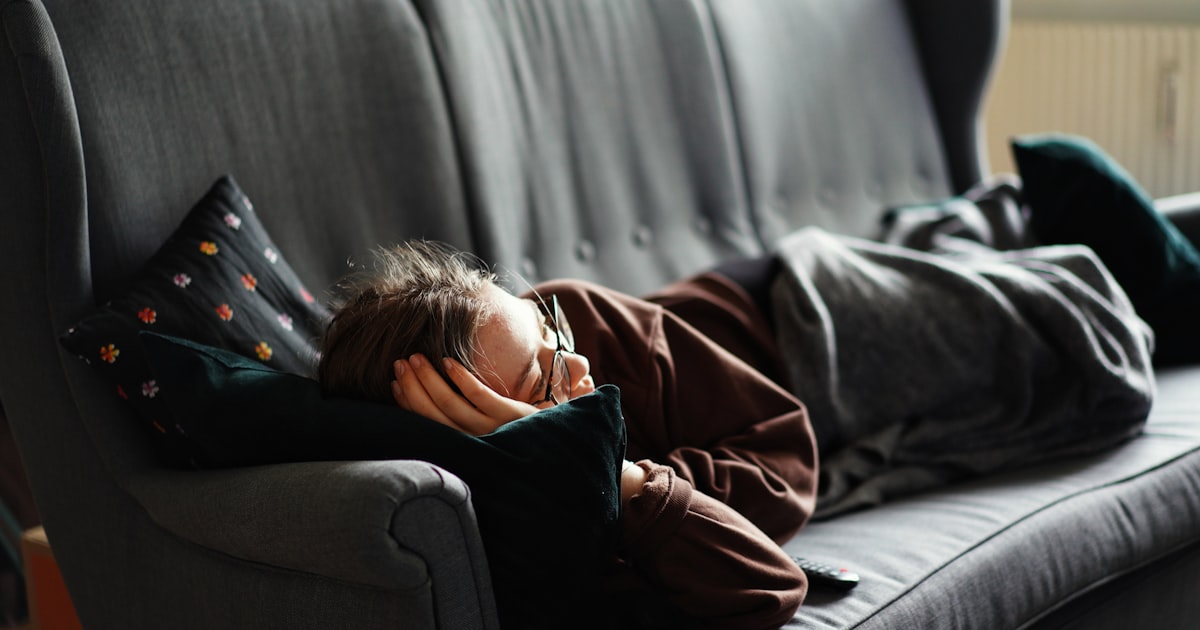
You lie down at 2 PM feeling a bit foggy. You set no alarm. You get up 50 minutes later feeling like someone unplugged you mid-sentence — heavy, confused, worse than before, and it lasts an hour.
Then a week later you doze for 15 minutes and come back sharp.
Same person, same couch, wildly different outcome. The difference is almost entirely how long you were down, and there's real research behind why.
Here's the practical version, with the evidence, including the parts where the popular advice is a little tidier than the science.
Key Facts
- A 10-minute nap was the most effective length tested in a controlled comparison of 5, 10, 20, and 30-minute naps (Sleep, 2006)
- The 30-minute nap caused grogginess first, benefits later — improvements didn't arrive until 35 minutes after waking (same study)
- Waking from deep sleep hits hard. One study cited in a 2019 review found a 41% performance drop on waking from slow-wave sleep (Nature and Science of Sleep, 2019)
- The afternoon dip isn't caused by lunch. It shows up without a meal and appears to be built into your body clock (Sleep, 2009)
- Naps can reduce sleep pressure enough to disturb the following night, even hours later (Sleep Medicine, 2017)
- The coffee nap holds up. Caffeine plus a 15-minute nap cut driving incidents to 9% of placebo, versus 34% for caffeine alone (Psychophysiology, 1997)
Want a follow-up on this topic? Get a note when Komori launches (2027)
One email when the contactless monitor ships, plus the occasional short follow-up on this topic. No spam, leave any time.
The Afternoon Dip Is Biology, Not Laziness
Somewhere between roughly 1 and 4 PM, most people get sleepy. You already knew that. What people get wrong is why.
It isn't the sandwich. Researchers modeling human sleep tendency found the afternoon dip shows up without meal ingestion — it's a second, smaller peak in your body's readiness to sleep, sitting on top of the big nighttime one, arriving in the early afternoon around 2 PM 1.
The mechanism is a collision between two systems. One is sleep pressure, which builds steadily the longer you've been awake. The other is your circadian clock, which pushes alertness up and down on a 24-hour rhythm. In the early afternoon, sleep pressure has been building since morning and the clock's alerting signal hasn't yet ramped into its evening peak. You get a gap. The gap is the dip 1.
You are not failing at being a person at 2 PM. You're on schedule.
Why 20 Minutes and 90 Minutes Are the Two Good Answers
Sleep isn't one thing. You move through stages: light sleep first, then deep slow-wave sleep, then REM, in cycles of about 90 to 110 minutes 2.
That ordering is the entire nap strategy.
The short nap works because deep sleep hasn't arrived yet. Slow-wave sleep takes a while to show up after you fall asleep. Keep the nap under about 20 to 30 minutes and you're mostly in light sleep, which is easy to leave. A 2019 review makes exactly this point: sleep inertia — that heavy grogginess on waking — "is less likely to occur after short naps (≤30 mins)" and the likely reason is "the typical delay in SWS onset" 3.
The long nap works because you come out the other side. Give it around 90 minutes and you complete a full cycle: light, deep, REM, and back toward light sleep before you wake. You get the memory and processing benefits of a nap containing deep sleep 4, and you're not being yanked out of the worst possible moment.
The best controlled comparison of short naps I know of ran 24 healthy adults through five conditions after a restricted night: no nap, and naps of exactly 5, 10, 20, and 30 minutes 5. Results:
- 5 minutes: barely different from not napping
- 10 minutes: immediate improvement on every measure, lasting up to 155 minutes
- 20 minutes: benefits appeared about 35 minutes after waking, lasting about 125 minutes
- 30 minutes: impaired alertness right after waking, then benefits up to 155 minutes
The authors concluded the 10-minute nap was the most effective duration they tested. Ten minutes. That's it.
About the "45-Minute Nap Is the Worst" Rule
You'll see this stated as a hard fact. The mechanism behind it is real. The exact number is folklore.
Here's what's actually supported. Deep sleep takes time to arrive, so short naps mostly avoid it. Waking out of deep sleep produces the worst grogginess — one study cited in that 2019 review found people woken from slow-wave sleep showed a 41% reduction in performance, while people woken from lighter stage-2 sleep performed about the same as people who were already awake 3. And the 30-minute nap in the controlled study above already showed the early-grogginess signature 5.
So the middle zone — somewhere north of 30 minutes and short of a full cycle — is where you're most likely to be pulled straight out of deep sleep. That's real. Whether your personal worst minute is 42 or 48 is not something anyone has measured, and it would move around depending on how sleep-deprived you were anyway.
Also worth being honest about: the 2019 review notes that some studies found no relationship between sleep stage at waking and post-nap performance 3. The picture is strong but not unanimous. What's solid is the practical rule.
The Table
| Nap length | What you get | Grogginess risk | Best for |
|---|---|---|---|
| 5 min | Almost nothing measurable 5 | None | Not worth setting an alarm |
| 10 min | Immediate alertness boost lasting over 2 hours 5 | Very low | The default. Start here. |
| 20 min | Solid benefits, but they kick in ~35 min after waking 5 | Low | When you have a slow re-entry |
| 30 min | Real benefits, delayed arrival 5 | Moderate — impaired right after waking | Only if you can absorb 30 foggy minutes |
| ~35–60 min | Likely interrupted deep sleep | Highest 3 | The zone to avoid |
| ~90 min | A full cycle, including REM and deep sleep 2 4 | Low if you wake at the end of the cycle | Big sleep debt, a truly free afternoon |
The Sleep-Pressure Tax
Here's the thing nobody mentions when they tell you to nap.
Sleep pressure is a finite tank that fills while you're awake and drains while you sleep. A nap drains some of it. That's the whole point — but it means you're spending tonight's sleepiness this afternoon.
A 2017 review put it bluntly: naps can "reduce sleep pressure so thoroughly that subsequent nocturnal sleep can be disturbed, even if occurring hours later" 4.
So the later and longer the nap, the more it costs you tonight. A 15-minute nap at 1 PM is nearly free. A 90-minute nap at 6 PM is a loan against your night, and you'll be paying it back at midnight staring at the ceiling. If you already have trouble falling asleep, that's the exact mechanism working against you — we went through the normal ranges in how long it should take you to fall asleep.
If you're catching up from a rough week, be aware that napping and sleeping in are different tools with different costs. We covered that in weekend sleep debt.
The Coffee Nap
This one sounds like a gimmick and isn't.
Caffeine takes roughly 20 to 30 minutes to properly kick in. A short nap takes about that long. So: drink the coffee, immediately lie down, wake up as the caffeine arrives. You get the nap's benefit and the caffeine's benefit stacked instead of fighting.
The classic test used 12 sleepy people in a driving simulator over a monotonous two-hour afternoon drive. Compared against placebo, 200 mg of caffeine alone cut driving incidents to 34% of placebo levels. Caffeine plus a 15-minute nap cut them to 9% 6. Even people who only dozed rather than properly sleeping still got the benefit.
There's a second reason it works. The 2019 sleep-inertia review notes that caffeine taken before sleep "has been shown to eliminate the effects of sleep inertia," while caffeine taken after waking is delayed and less effective 3. Front-loading it is the right call.
Who Should Be Careful
People with insomnia. The standard advice during insomnia treatment is to skip naps, precisely to keep sleep pressure high for the night. That said, a 2024 study comparing 54 nappers against 54 matched non-nappers going through cognitive behavioral therapy for insomnia found that short early-afternoon naps under 30 minutes didn't compromise treatment outcomes, and improved afternoon alertness 7. So the rule is softer than it used to be — but this is a decision to make with the clinician running your treatment, not on your own.
Older adults. Frequent habitual napping in older adults has been linked in observational research with cognitive decline, high blood pressure, diabetes, and osteoporosis 4. Read that carefully: those are associations, and the direction is far from clear. Heavy napping may be an early sign of an underlying problem rather than the cause of one. The authors of that review concluded it's "premature to 'prescribe' naps" for older adults 4.
Anyone whose napping recently changed. A sudden new need to nap every day isn't a nap question. That's a doctor question.
Where Komori Fits
Honest answer: mostly it doesn't. Komori is being built for the bed at night, and naps happen on couches in the afternoon.
What it is designed to do, when it ships: track sleep position, movement and restlessness, bed-exit events, and room conditions — temperature, humidity, CO2, light, and noise — contactless, with no camera and nothing worn. It isn't a medical device, it doesn't diagnose anything, and it isn't designed to measure breathing, heart rate, or blood oxygen.
The connection to naps is indirect but real. If you're napping every afternoon, the interesting question is what your nights look like — whether you're restless, whether you're getting out of bed repeatedly, whether the room is working against you. A daytime nap habit is often a symptom of a nighttime problem. We wrote about what movement patterns can tell you and why we don't compress a night into a single score.
If you take one thing from this: set an alarm. Ten to twenty minutes, early afternoon, and get up when it goes off. That's the version of napping the research supports, and it's free.
And if you're napping daily and still exhausted, the nap isn't the story. Bring that to your doctor.
Footnotes
-
Bes F, Jobert M, Schulz H. "Modeling Napping, Post-Lunch Dip, and Other Variations in Human Sleep Propensity." Sleep, 2009. ↩ ↩2
-
Patel AK, et al. "Physiology, Sleep Stages." StatPearls Publishing. Sleep cycles of roughly 90 to 110 minutes. ↩ ↩2
-
Hilditch CJ, McHill AW. "Sleep inertia: current insights." Nature and Science of Sleep, 2019. ↩ ↩2 ↩3 ↩4 ↩5
-
Mantua J, Spencer RMC. "Exploring the nap paradox: are mid-day sleep bouts a friend or foe?" Sleep Medicine, 2017. ↩ ↩2 ↩3 ↩4 ↩5
-
Brooks A, Lack L. "A Brief Afternoon Nap Following Nocturnal Sleep Restriction: Which Nap Duration is Most Recuperative?" Sleep, 2006. 24 participants. ↩ ↩2 ↩3 ↩4 ↩5 ↩6
-
Reyner LA, Horne JA. "Suppression of sleepiness in drivers: combination of caffeine with a short nap." Psychophysiology, 1997. 12 participants. ↩
-
"Napping during cognitive behavioural therapy for insomnia: Friends or foes?" Journal of Sleep Research, 2024. 54 nappers vs 54 matched controls. ↩
Want a follow-up on this topic? Get a note when Komori launches (2027)
One email when the contactless monitor ships, plus the occasional short follow-up on this topic. No spam, leave any time.
Keep reading

Want to see your sleep position data?
Join the free waitlist for launch updates. Or lock in founder pricing with the Insider Pass ($49, credited toward your purchase).