Sleep Inertia: Why You Feel Worse Right After Waking Up
Dovy Paukstys
Founder, Komori Care
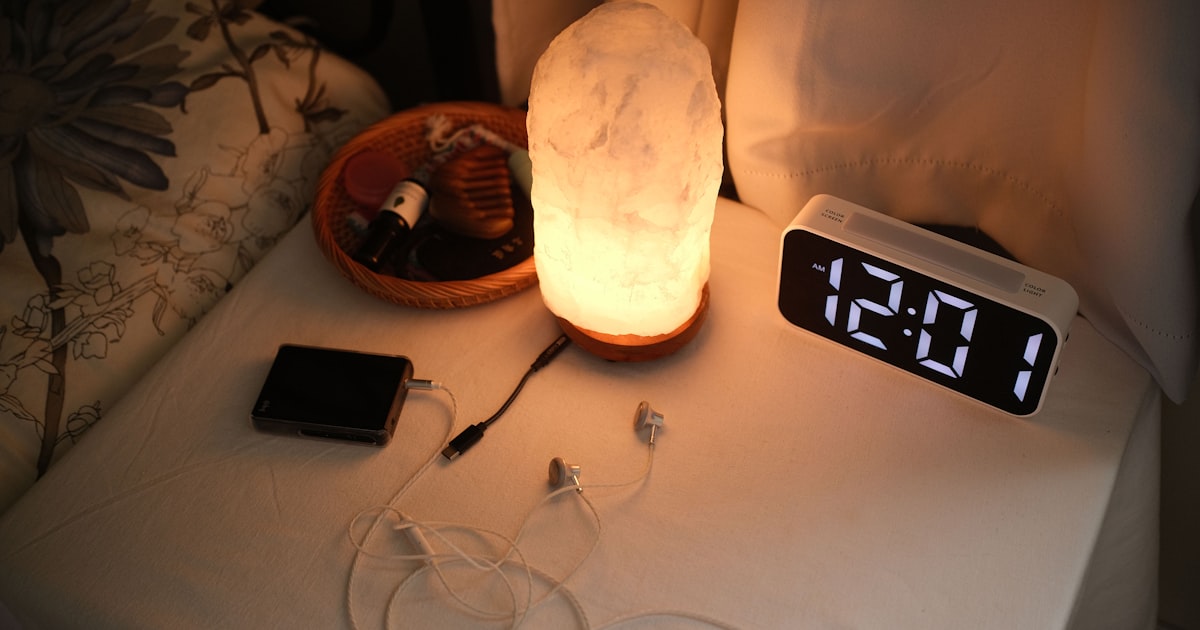
The Twenty Minutes You Don't Get Credit For
The alarm goes off. You sit up. And for a while you are, functionally, a worse person.
You can't find words. Simple decisions feel expensive. Someone asks you something reasonable and you resent them for it. Ten or twenty minutes later it lifts and you feel fine, and by then you've already had a small argument about the dishwasher.
This has a name. It's called sleep inertia, and it's been measured in labs for decades. It is not a character flaw, it's not "not being a morning person," and it's not something you're imagining.
Here's what it is, why some mornings are so much worse than others, and which of the popular fixes actually hold up.
Key Facts
- Sleep inertia is the period of impaired alertness and performance right after waking; severe impairment usually clears in 15 to 30 minutes, with milder effects sometimes lasting an hour or more (Nature and Science of Sleep, 2019)
- In one classic study, performance on a math task right after waking was worse than after a full night of sleep deprivation (reviewed in Nature and Science of Sleep, 2019)
- Sleep inertia is most intense when you wake during your biological night (Sleep Medicine Reviews, 2017)
- After weeks of short sleep, recovery to baseline took about 70 minutes versus roughly 10 minutes when well rested (SLEEP, 2019)
- Using a snooze alarm made sleep inertia worse, with slower reaction times and far more sleep-stage churn before the real wake-up (Journal of Physiological Anthropology, 2022)
- A 10-minute nap improved alertness immediately; a 30-minute nap produced a stretch of impairment first (SLEEP, 2006)
Want a follow-up on this topic? Get a note when Komori launches (2027)
One email when the contactless monitor ships, plus the occasional short follow-up on this topic. No spam, leave any time.
What Sleep Inertia Actually Is
Waking up is not a switch. It's a fade.
Your brain doesn't flip from "asleep" to "awake" the moment your eyes open. Different regions come back online at different speeds. Sleep-like electrical activity keeps showing up in brain recordings for a while after you're technically awake and walking around.
Researchers describe sleep inertia as a distinct state, measurably different from being awake — not just a mild version of tiredness 1. It shows up as slower reaction times, worse short-term memory, bad arithmetic, and poor decision-making.
How bad? One study found that performance on an addition test immediately after waking was more impaired than performance after a full night without sleep 2. Your worst two minutes of the day are the two right after the alarm, and it isn't close.
The obvious real-world version: doctors on call, firefighters, new parents, anyone woken by a phone. Those people are being asked to make judgment calls in the exact window where judgment is worst.
How Long Does It Last?
Depends on the morning. But there's a rough shape.
Reviews of the literature put the severe part at 15 to 30 minutes, with milder leftovers that can drag on for an hour or more depending on conditions 2. Some lab studies tracking it carefully found subjective alertness still climbing two hours after waking, and performance on a math task not fully back to baseline for three and a half hours 2.
That's the extreme end, under lab conditions with sleep loss involved. For a normally rested person on a normal morning, you're mostly talking about the first 15 to 30 minutes.
Which means the coffee didn't fix it. Time fixed it, and the coffee was there when it happened. More on that below.
What Makes It Worse
Sleep debt, by a mile
This is the biggest and best-established one.
In a tightly controlled study, 26 healthy adults spent 32 to 38 days in a lab on either a normal schedule (8 hours of sleep per 24) or chronic short sleep (5.6 hours per 24). Both groups were tested within two minutes of waking 3.
The short-sleep group performed about 10% worse immediately on waking. The gap in recovery was the striking part: sleep-restricted participants took roughly 70 minutes to get back to their baseline. Well-rested participants took about 10 minutes 3.
Seven times longer. Same people, same task, different amount of accumulated sleep debt. If your mornings are brutal, the most likely reason is that you're running a deficit — which is also why catching up on weekends doesn't reset things as cleanly as it feels like it should.
Waking during your biological night
Your body has an internal clock that decides when it thinks it's night, and that clock doesn't care what time your alarm is set for.
Sleep inertia is most intense during awakenings from the biological night 1. This is why a 3am alarm feels like a physical assault while a 7am alarm on the same amount of sleep feels merely annoying. It's also why night-shift workers get hit so hard, and why shift schedules are their own category of problem.
Long naps
A 90-minute nap is not a longer version of a 20-minute nap. It's a different experience with a different exit.
In a study of 24 adults comparing naps of 5, 10, 20, and 30 minutes after a short night, the 10-minute nap produced immediate improvements across every measure — sleepiness, fatigue, vigor, and cognitive performance — with benefits lasting up to 155 minutes. The 30-minute nap produced a stretch of impaired alertness right after waking first, and only then delivered its benefits 4.
In a separate simulated night-shift study, 90-minute naps were followed by significant increases in both sleepiness and fatigue on waking 5.
Short nap: you wake up and go. Long nap: you wake up and pay a toll first.
The deep sleep question
Here's where I'll break with the standard explanation.
You've read that sleep inertia is bad because you were pulled out of deep sleep — N3, the slow-wave stage. It's the reason every "smart alarm" exists. And it's plausible: waking from deeper stages is associated with lower cortical arousal and more slow brain-wave activity in the moments after 6.
But the review evidence is messier than the popular version. The 2019 review notes studies pointing both ways, including one where participants showed no performance impairment despite 91% of them waking out of slow-wave sleep 2.
My read: sleep stage at wake-up is real but oversold, and sleep debt plus body-clock timing are doing most of the work. That distinction matters a lot for the next section.
The Snooze Button Is Actively Hurting You
I'll be blunt: snoozing is the worst thing on this list that you have complete control over.
Researchers compared waking to a single alarm against waking with a snooze alarm going off repeatedly. With snooze, reaction times were significantly slower (238.4 ms versus 221.9 ms), and self-reported vigor improved after waking without snooze but not with it 7.
The mechanism is visible in the sleep recordings. In the final 20 minutes before the intended wake time, the snooze condition produced more N1 (that drowsy borderline stage) and more wakefulness, less total sleep, and a jump in sleep-stage transitions — 12.2 transitions versus 3.5 without snooze 7.
You aren't getting nine more minutes of sleep. You're getting nine minutes of your brain being repeatedly yanked between stages, and then you get up anyway, worse off.
About Those "Wake You in Light Sleep" Alarms
Smart alarms promise to watch your stages and wake you during light sleep, inside a 30-minute window, so you skip the fog.
Two problems.
First, the premise is shaky. As covered above, stage at awakening is not clearly the dominant driver of sleep inertia.
Second, the input is unreliable. Those alarms run on a wrist device's stage estimate, and consumer stage estimates aren't precise enough to carry that weight. When six popular wrist wearables were compared to a full sleep study in 62 adults, agreement on four-stage scoring ranged from a Cohen's kappa of 0.21 to 0.53 — fair to moderate, not good 8. Correctly labeled deep sleep ranged from 47% to 70% depending on the device.
An earlier seven-device study found the same pattern from the other direction: devices spot sleep very well (sensitivity 0.93 or higher) but spot wake poorly (specificity 0.18 to 0.54) 9.
So a smart alarm is using a rough guess about a mechanism that's only partly true, to shave a few minutes off a window that's mostly set by your sleep debt. If it makes your mornings feel better, keep it — placebo counts. Just don't buy a device for that feature.
What Actually Helps
| Fix | Does it work? | The detail |
|---|---|---|
| Sleeping enough, consistently | Yes, by far the best | ~10 min recovery when rested vs ~70 min when sleep-restricted 3 |
| Not hitting snooze | Yes | Slower reaction times and 3x the stage transitions with snooze 7 |
| Keeping naps short (10–20 min) | Yes | 10-min nap improved everything immediately; 30-min nap caused inertia first 4 |
| Caffeine before a short nap | Some evidence | Reviewed as effective for the nap case; obviously not for bedtime 2 |
| Caffeine after waking | Weakly | Reviewed as limited: the effects are delayed, so it lands as inertia is already lifting 2 |
| Bright light after waking | Not much, honestly | A crossover study found blue-enhanced white light had little effect on sleep inertia 10 |
| Waking at a consistent time | Yes, indirectly | Stabilizes body-clock timing, so you stop waking during your biological night 1 |
| "Smart" stage-based alarms | Unproven | Built on wearable staging that agrees with lab scoring only fair-to-moderately 8 |
The honest summary: there is no trick. The interventions that work are the boring structural ones — enough sleep, a consistent wake time, short naps instead of long ones, and getting out of bed on the first alarm.
The 20 minutes of fog is normal and it goes away on its own. Plan around it instead of fighting it. Don't schedule anything that matters in the first half hour. Don't send that email.
Where Komori Fits
Komori isn't being built to tell you anything about your sleep stages, and that's on purpose.
When it ships, it's designed to be a contactless device that senses from above the bed — no wearable, no camera — reporting sleep position, movement and restlessness, bed-exit events, and your room's conditions overnight: temperature, humidity, CO2, light, and noise. It's a general wellness device, not a medical or diagnostic one, and it isn't an alarm clock.
What it's built to give you is the boring structural picture, night after night: when you actually got into bed, when you actually got out of it, and how much that wandered across the week. Given that sleep debt and irregular timing are the two things most clearly linked to rough mornings, that's the more useful view than a stage chart.
Room conditions matter here too — a hot or stuffy room fragments sleep, which we covered in how temperature affects sleep and CO2 in the bedroom.
One last thing, and I mean this. If your morning fog regularly lasts hours, if you wake up confused or disoriented, or if you're falling asleep during the day despite sleeping plenty, that's a different conversation. Prolonged and severe sleep inertia — sometimes called sleep drunkenness — is something sleep specialists take seriously 1. This post is educational, not medical advice and not a diagnosis. Bring it to your doctor.
Footnotes
-
Trotti LM. "Waking up is the hardest thing I do all day: Sleep inertia and sleep drunkenness." Sleep Medicine Reviews, 2017. ↩ ↩2 ↩3 ↩4
-
Hilditch CJ, McHill AW. "Sleep inertia: current insights." Nature and Science of Sleep, 2019. ↩ ↩2 ↩3 ↩4 ↩5 ↩6
-
McHill AW, et al. "Chronic sleep restriction greatly magnifies performance decrements immediately after awakening." SLEEP, 2019. ↩ ↩2 ↩3
-
Brooks A, Lack L. "A Brief Afternoon Nap Following Nocturnal Sleep Restriction: Which Nap Duration is Most Recuperative?" SLEEP, 2006. ↩ ↩2
-
Oriyama S, Miyakoshi Y. "The effects of nighttime napping on sleep, sleep inertia, and performance during simulated 16 h night work: a pilot study." Journal of Occupational Health, 2017. ↩
-
Tomzig M, et al. "The arousal paradox in critical task performance in automated driving during sleep inertia using a quasi experimental approach." Scientific Reports, 2025. ↩
-
Ogawa K, Kaizuma-Ueyama E, Hayashi M. "Effects of using a snooze alarm on sleep inertia after morning awakening." Journal of Physiological Anthropology, 2022. ↩ ↩2 ↩3
-
Schyvens AM, et al. "A performance validation of six commercial wrist-worn wearable sleep-tracking devices for sleep stage scoring compared to polysomnography." SLEEP Advances, 2025. ↩ ↩2
-
Chinoy ED, et al. "Performance of seven consumer sleep-tracking devices compared with polysomnography." SLEEP, 2021. ↩
-
Santhi N, et al. "Morning Sleep Inertia in Alertness and Performance: Effect of Cognitive Domain and White Light Conditions." PLoS One, 2013. ↩
Want a follow-up on this topic? Get a note when Komori launches (2027)
One email when the contactless monitor ships, plus the occasional short follow-up on this topic. No spam, leave any time.
Keep reading
Want to see your sleep position data?
Join the free waitlist for launch updates. Or lock in founder pricing with the Insider Pass ($49, credited toward your purchase).